

To strengthen analytical clarity and answer-writing skills for the UPSC Civil Services Mains Examination, we present today’s high-quality GS Paper 2 practice set. These model-style answers combine constitutional understanding, international relations, and geopolitical analysis—key requirements for scoring high in GS Paper 2.
QUESTION 1
In the context of seniority in higher judicial services, how can the Supreme Court strike a ‘proper balance’ between merit, experience and equitable representation of promotee and direct recruit judges?
Introduction
The issue of determining seniority in Higher Judicial Services (HJS) has resurfaced following a Constitution Bench hearing led by Chief Justice B.R. Gavai. The core challenge lies in balancing the interests of promotee judges, who rise through the lower judiciary after years of service, and direct recruits, who enter the district judge cadre from the Bar at a younger age. The Supreme Court is now tasked with evolving a framework that ensures merit, experience, and equitable representation are harmoniously integrated in service progression.
Understanding the Structural Imbalance
1. Two Streams of Appointment in HJS
Judges enter the Higher Judicial Service through:
- Promotion from the subordinate judiciary
- Direct recruitment from the Bar
Promotees constitute nearly 75% of the cadre, yet direct recruits often rise faster due to younger entry age and existing roster mechanisms.
2. Age Gap and Its Impact on Seniority
- Promotee judges generally reach the district judge level in their mid-40s.
- Direct recruits join in their mid-30s.
- Since seniority is tied to the date of entry, promotees fall behind in promotional lists despite having greater judicial experience.
This creates what the amicus curiae called an “unintended structural disadvantage.”
3. Effects on Career Progression
Because seniority heavily influences elevation:
- Promotees often reach higher posts close to retirement.
- Many retire before becoming eligible for High Court elevation.
- The system ends up under-utilising vast trial court experience.
Example:
- In Bihar: 86 out of 91 Principal District Judges are direct recruits.
- In Uttar Pradesh: 58 out of 70 are direct recruits.
This imbalance raises concerns of representation, fairness, and morale.
How the Supreme Court Can Establish a Proper Balance
1. Restoring the Merit-Based LDCE (Limited Departmental Competitive Examination)
The Supreme Court in 2025 reaffirmed:
- LDCE quota must constitute 25% of promotional posts (many states had reduced it to 10%).
- Eligibility service reduced from five years to three years.
This enables meritorious officers to rise faster without undermining equity.
2. Harmonising Seniority Through a Balanced Roster
A rational roster system can incorporate:
- Proportionate placement of promotees and direct recruits
- Common seniority lists reflecting both merit and experience
- Hybrid criteria combining entry year + performance indicators
This ensures neither group is disproportionately advantaged.
3. Recognising Trial-Court Experience as a Merit Component
The Supreme Court can direct High Courts to award experience weightage for:
- Years in lower judiciary
- Quality of judgments
- Efficiency, disposal rates, integrity records
This makes seniority not merely chronological but substantive.
4. Fixing Promotion Quotas Based on Sanctioned Strength
The Court recently clarified that:
- All quotas must be calculated on sanctioned cadre strength, not vacancies.
This prevents manipulation of quota distribution and safeguards the interests of promotees.
5. Ensuring Minimum Bench Experience for Direct Recruits
By reinstating the requirement of three years of legal practice, the Court ensures:
- Direct recruits possess adequate courtroom exposure
- Promotees do not feel overshadowed by inexperienced entrants
This encourages competence and fairness.
6. Periodic Review Mechanism
The Supreme Court may direct:
- Regular audits of seniority lists
- Transparency mandates for roster application
- Uniform implementation across states
Ensuring consistency strengthens judicial integrity.
Conclusion
The Supreme Court’s evolving framework attempts to restore a balanced, merit-driven, yet equitable promotion system. By recognising experience, ensuring fair quota application, and maintaining roster neutrality, the Court can prevent structural disadvantages and preserve both efficiency and diversity within the judiciary. A well-balanced system ultimately strengthens the higher judiciary’s credibility, representativeness, and institutional integrity.
QUESTION 2
Discuss how the dispute over the Senkaku/Diaoyu Islands reflects broader geopolitical tensions in East Asia. What are its implications for regional stability?
Introduction
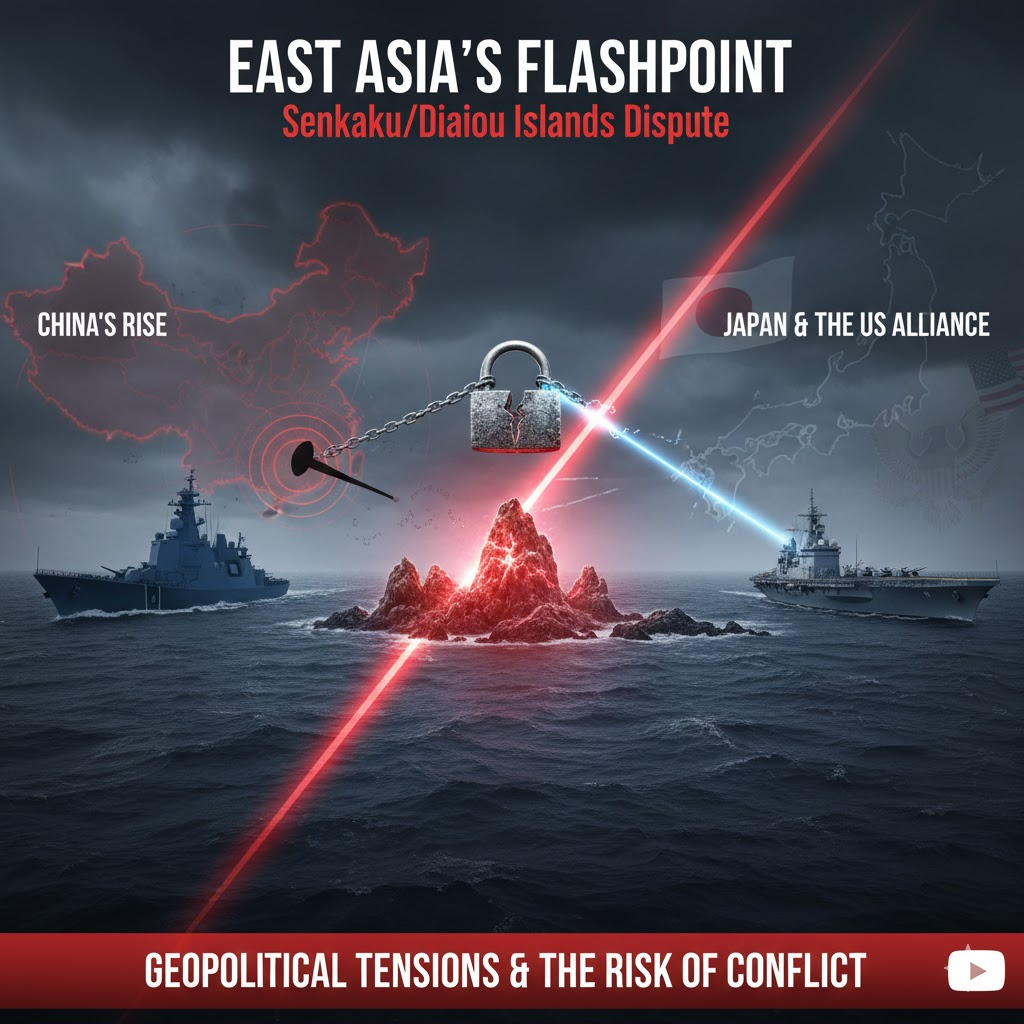
The Senkaku/Diaoyu Islands, claimed by Japan, China, and Taiwan, are a flashpoint in East Asia. Though uninhabited and small, their strategic location in the East China Sea and overlapping sovereignty claims make them a hotspot of regional rivalry, nationalism, and great-power competition. The dispute reflects deep historical grievances, power transitions, and maritime contestation.
Core Geopolitical Drivers Behind the Dispute
1. Strategic Resources and Maritime Control
The region is believed to possess:
- Hydrocarbon reserves
- Rich fishing grounds
- Key shipping routes
Control of the islands enables:
- Extension of EEZs
- Access to potential oil and gas fields
- Greater maritime military advantage
Thus, the dispute is not about territory alone, but strategic leverage in East Asia.
2. Historical Memory and Nationalism
Japan and China share hostile historical legacies:
- Japanese colonisation of Taiwan
- Atrocities during the World Wars
- Long-standing mistrust and unresolved wartime narratives
Nationalist leaders in both countries use the islands to:
- Assert sovereignty
- Consolidate domestic political support
- Challenge each other’s strategic space
This turns the islands into symbols of national pride.
3. Competing Territorial Narratives
- Japan claims administrative control since 1895 after the First Sino-Japanese War.
- China and Taiwan cite ancient maps and navigation records to assert sovereignty.
- In 1971, the US returned the islands to Japan under the Okinawa Reversion Agreement, which China contested.
Such conflicting interpretations deepen geopolitical tensions.
4. Military Posturing and Power Projection
- The Chinese Coast Guard frequently enters waters around the islands.
- Japan strengthens its Self-Defense Forces (SDF) and maritime surveillance.
- The US conducts Freedom of Navigation Operations (FONOPs).
The area has become a militarized flashpoint, where a minor confrontation could escalate.
Implications for Regional Stability
1. Risk of Armed Conflict or Miscalculation
Frequent maritime close encounters raise the possibility of:
- Accidental clashes
- Rapid escalation
- Drawing in the US (due to Japan-US security treaty)
Even a small incident could trigger major confrontation.
2. Strengthening of Military Alliances
The dispute reinforces:
- US–Japan alliance
- US commitment to Indo-Pacific security
- Japan’s push for military modernization
- Quadrilateral cooperation (Quad)
China views this as containment, increasing its assertiveness.
3. Strained Sino-Japanese Relations
The dispute:
- Hinders economic cooperation
- Fuels mutual suspicion
- Strengthens nationalist rhetoric on both sides
This undermines regional diplomatic cohesion.
4. Impact on Regional Order and Maritime Security
Tensions around the islands:
- Intensify the East China Sea security dilemma
- Disrupt fishing and resource exploration
- Highlight unresolved maritime boundary issues
- Contribute to militarization of the Indo-Pacific
The conflict also diverts attention from cooperative opportunities like climate, trade, and disaster management.
5. Influence on Taiwan Question
Because Taiwan also claims the islands:
- Any escalation affects the Taiwan Strait
- Increases complexity of cross-Strait relations
- Raises the stakes for US involvement
This adds another layer to East Asia’s strategic volatility.
Conclusion
The Senkaku/Diaoyu dispute symbolizes the larger geopolitical contest between Japan and China, fuelled by history, nationalism, resource competition, and military posturing. While diplomacy and crisis-management mechanisms have prevented escalation, the dispute highlights the fragility of regional peace amid broader tensions such as North Korea’s nuclear program and US-China rivalry. Maintaining stability requires dialogue, confidence-building measures, and responsible maritime conduct from all stakeholders.
Related Previous Year Questions
- “The reform process in the United Nations remains unresolved, because of the delicate imbalance of East and West and entanglement of the USA vs. Russo-Chinese alliance.” Examine and critically evaluate the East-West policy confrontations in this regard. (2025)
- With respect to the South China sea, maritime territorial disputes and rising tension affirm the need for safeguarding maritime security to ensure freedom of navigation and over flight throughout the region. In this context, discuss the bilateral issues between India and China. (2014)
Read More: UPSC Mains Answer Practice GS Paper 1