

In this comprehensive guide, we present high-quality, exam-oriented, deeply-analytical answers to two important GS Paper 1 topics: Volcanic Eruptions and Tropical Forest Biodiversity. These model-style writeups follow the UPSC Mains structure, maintain conceptual clarity, and integrate trusted facts, authentic data, and analytical frameworks that can help aspirants secure high marks.
QUESTION 1
What are the geological factors that determine whether a volcanic eruption will be effusive or explosive? Discuss in the context of Hayli Gubbi’s recent eruption.
Introduction
Volcanoes erupt differently due to varying physical and chemical characteristics of magma. The recent eruption of the Hayli Gubbi volcano in northeastern Ethiopia, dormant for nearly 12,000 years, displayed a predominantly explosive character marked by ash plumes rather than flowing lava. This contrast highlights the importance of geological parameters in defining whether an eruption becomes effusive or explosive.
Geological Factors Determining Eruption Type
1. Magma Viscosity — Controlled by Silica Content
- High silica magma (rhyolitic/andesitic) → thick, sticky, viscous
→ traps volcanic gases → explosive eruptions. - Low silica magma (basaltic) → runny, fluid
→ allows gases to escape → effusive eruptions.
High viscosity prevents the free movement of gases, allowing dangerous pressure buildup.
2. Gas Content and Volatile Concentration
Volatile-rich magma (CO₂, SO₂, water vapour) increases internal pressure:
- High gas concentration → violent expansion → explosive eruption.
- Low gas concentration → smoother release → effusive lava flows.
Explosive eruptions eject pyroclasts, ash, and tephra instead of lava.
3. Magma Ascent Rate
- Rapid ascent → lower degassing → volatile retention → explosive eruptions.
- Slow ascent → gases separate gradually → effusive eruptions.
Fast-rising magma does not allow time for gases to escape.
4. Temperature of Magma
- Hotter magma → lower viscosity → gentle, effusive eruptions.
- Cooler magma → thicker magma → gas retention → explosive eruptions.
Temperature directly influences magma behaviour.
5. Tectonic Setting
- Divergent boundaries (e.g., Mid-Atlantic Ridge) → basaltic magma → effusive flows.
- Convergent boundaries (subduction zones) → silica-rich magma → explosive eruptions.
Subducted sediments increase silica content and volatile concentration.
6. Presence of Groundwater or Seawater
Water–magma interaction produces phreatomagmatic explosions, causing sudden steam-driven blasts.
This amplifies eruption explosivity.
Hayli Gubbi Eruption: A Case-Based Analysis
The Hayli Gubbi eruption was dominated by ash plumes instead of lava flows due to:
✔ High silica, viscous magma
Prevented lava from flowing freely.
✔ High gas content in the magma chamber
Triggered pressure buildup.
✔ Rapid magma ascent after 12,000 years of dormancy
Dormant volcanoes often accumulate evolved, gas-rich magma.
✔ Explosive release of tephra and ash
The ash travelled across international boundaries due to strong winds, affecting Ethiopia, Yemen, Oman, Pakistan, India, and China, even causing aviation disruptions.
Geological Context
Ethiopia has 58 known volcanoes, of which 43 (including Hayli Gubbi) have had no eruptions during the Holocene. Long dormancy is linked with high-pressure, explosive eruptions.
Conclusion
The style of volcanic eruption is shaped primarily by viscosity, gas content, and magma ascent dynamics. Hayli Gubbi’s eruption demonstrated classic indicators of explosive volcanism. Understanding these factors is crucial for early warning, hazard mapping, and disaster preparedness in tectonically active regions.
QUESTION 2
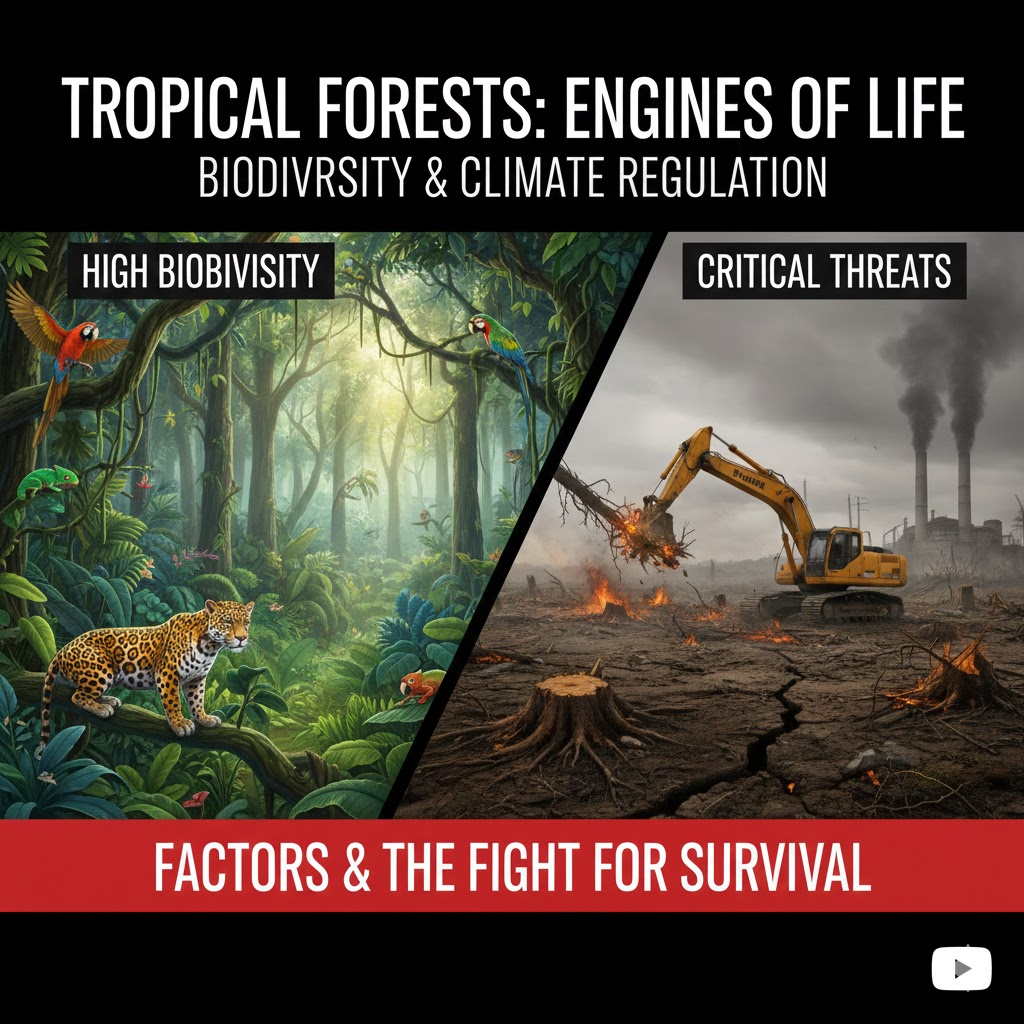
“Tropical forests are the engines of global biodiversity and climate regulation.” Discuss the factors responsible for their high biodiversity and the threats they currently face.
Introduction
Tropical forests, including tropical rainforests and seasonal forests, harbour the world’s richest ecosystems — hosting over 50% of all terrestrial species despite covering only 7% of Earth’s land area. Their biodiversity arises from abundant solar energy, ecological complexity, and geological stability. They also serve as massive carbon sinks and are essential for climate regulation.
Factors Responsible for High Biodiversity in Tropical Forests
1. Continuous Warm Temperatures & Abundant Rainfall
Located near the equator, these forests receive:
- High solar radiation
- Heavy rainfall
- Year-round warm climate
This supports uninterrupted photosynthesis, promoting lush vegetation and diverse habitats.
2. Geological and Climatic Stability
Unlike higher latitudes affected by glaciation, tropical forests have remained stable for millions of years, enabling:
- Long-term species evolution
- High speciation rates
- Minimal extinction events
Stability fosters complex biological interactions.
3. Vertical Stratification of the Forest
A multi-layered structure creates numerous microhabitats:
- Emergent layer
- Canopy
- Understory
- Shrub layer
- Forest floor
Each layer supports specialised species, increasing biodiversity geometrically.
4. Rich Nutrient Cycling and Soil Microbial Diversity
Rapid decomposition and recycling of nutrients by fungi, microbes, and insects create:
- Faster energy flow
- Greater biomass
- Stable ecological networks
This supports vast plant and animal communities.
5. Co-evolution and Symbiotic Interactions
Tropical forests exhibit intense co-evolution:
- Birds & plants (pollination)
- Mammals & trees (seed dispersal)
- Insects & flowers (mutualism)
This evolutionary interdependence enhances specialization and diversity.
6. High Primary Productivity
High energy availability results in:
- Larger biomass
- Multiple trophic levels
- Complex food webs
This supports thousands of species within small areas.
Threats Faced by Tropical Forests
1. Deforestation and Land Conversion
The biggest threat includes:
- Palm oil plantations
- Cattle ranching
- Logging
- Slash-and-burn agriculture
- Infrastructure projects
This leads to irreversible habitat loss.
2. Climate Change
Rising global temperatures cause:
- Longer dry seasons
- Increased droughts
- Mega-fires
- Altered rainfall patterns
Forests risk becoming net carbon emitters instead of carbon sinks.
3. Illegal Wildlife Trade and Overexploitation
Unsustainable hunting and poaching disrupt:
- Seed dispersal
- Predator–prey dynamics
- Pollination networks
Species decline weakens the entire ecosystem.
4. Invasive Species
Non-native species outcompete endemic flora and fauna, causing:
- Disruption of food chains
- Biodiversity loss
- Altered soil conditions
- Collapse of native habitats
5. Mining and Industrial Pollution
Open-cast mining, oil extraction, and toxic waste:
- Destroy landscapes
- Contaminate rivers
- Kill aquatic and land species
This degrades large forest tracts.
6. Weak Governance and Insufficient Funding
Many tropical nations face issues like:
- Poor enforcement of conservation laws
- Corruption in forest management
- Inadequate funding for protected areas
This accelerates illegal logging, land grabbing, and wildlife trafficking.
Conclusion
Global initiatives such as the Tropical Forest Forever Facility (TFFF) aim to reward nations for preserving old-growth forests, ensuring that standing forests are more economically valuable than cleared ones. Safeguarding tropical forests requires international cooperation, community-led conservation, climate resilience strategies, and strong governance. Protecting these ecosystems is essential for maintaining biodiversity and regulating the Earth’s climate system.
Related Previous Year Questions
Identify and discuss the factors responsible for diversity of natural vegetation in India. Assess the significance of wildlife sanctuaries in rain forest regions of India. (2023)
Examine the status of forest resources of India and its resultant impact on climate change. (2019)
Read More: Environment Current Affairs Updates